


Stainless Steel Ball Valves for Industrial Piping: Selection, Standards, and Sourcing Guide

A stainless steel ball valve looks simple: a drilled ball rotates 90 degrees to start or stop flow. In industrial service, however, reliable performance depends on a chain of decisions involving pressure, temperature, media chemistry, seat material, end connection, port geometry, actuation, testing, and documentation. A valve that is acceptable for clean water may fail quickly in steam, solvent, chloride-bearing water, abrasive slurry, or frequent-cycle automation. For buyers, engineers, distributors, and OEMs, the right specification is therefore more valuable than a low unit price.
This guide explains how to select and source stainless steel ball valves for process plants, utilities, skid packages, food and beverage systems, water treatment, chemical transfer, and general industrial piping. It is designed as a practical decision framework for global procurement teams comparing SS304 and SS316 valves, threaded and flanged connections, full-port and reduced-port designs, manual and automated operation, and manufacturer quality evidence.
1. Start With the Operating Envelope
The first step is to define the complete operating envelope, not only the normal condition. Record the fluid name and concentration, design pressure, normal pressure, design temperature, normal temperature, minimum ambient temperature, line size, pipe schedule, flow direction, expected solids, cleaning chemicals, cycle frequency, and whether the valve must isolate, throttle, drain, vent, or provide emergency shutoff. Also identify pressure surges, thermal expansion, vacuum, fire exposure, and long idle periods. These edge conditions often determine the seat, seal, body, and testing requirements.
Avoid specifying a valve by nominal pressure alone. A published pressure class is not automatically valid at every temperature because polymer seats and elastomer seals usually become the limiting components. Ask the supplier for a pressure-temperature rating that applies to the exact body, seat, stem seal, and end connection combination. The system designer must then compare that curve with the worst credible process condition and applicable project code.
2. SS304 vs SS316: Select for the Actual Media
Stainless steel provides corrosion resistance, cleanability, strength, and a professional surface finish, but the grade matters. Cast equivalents are commonly referenced alongside wrought grades, and buyers should confirm the material designation used for every pressure-containing part. SS304-type materials are widely used for clean water, air, many mild chemicals, and general industrial duties. SS316-type materials add molybdenum and are commonly preferred where improved resistance to chlorides, marine atmosphere, certain chemicals, or more demanding sanitation conditions is required.
SS316 is not a universal solution. Chloride concentration, temperature, oxygen level, crevices, deposits, stress, and cleaning chemistry can change corrosion risk dramatically. Strong acids, caustics, solvents, or high-purity service may require another alloy or a lined valve. Request a written material recommendation based on fluid data, then verify it against the plant's corrosion guidance. For traceability, specify material certificates for pressure-retaining components and require heat numbers to be linked to the supplied batch when the project demands it.
3. Choose Body Construction and Port Design
One-piece ball valves are compact and economical for straightforward isolation duties. Two-piece designs provide a practical balance of serviceability, cost, and availability. Three-piece ball valves allow the center section to be removed while the end connections remain in the pipeline, which can reduce maintenance time in welded, sanitary, or frequently serviced systems. The best construction depends on access, cleaning method, maintenance philosophy, leakage risk, and lifecycle cost rather than purchase price alone.
A full-port valve has a bore close to the connected pipe's internal diameter, reducing pressure loss and making it attractive for viscous fluids, piggable lines, slurries, and energy-sensitive systems. A reduced-port valve is smaller and may be economical where some pressure drop is acceptable. Ask for the actual bore dimension instead of relying only on the words full port. For processes containing solids, verify cavity behavior and consider whether trapped media can harden, expand, contaminate the next batch, or prevent smooth operation.
4. Match the End Connection to the Piping Standard
Threaded ball valves are common in compact utility and equipment connections. The thread standard must be explicit: NPT and BSP families are not interchangeable, and parallel and tapered forms require different sealing approaches. Socket-weld ends suit small-bore high-integrity piping but require controlled welding and cleaning. Butt-weld ends minimize external leakage paths and can suit permanent process lines. Flanged valves simplify removal and are often selected for larger sizes, critical service, or project-standard piping.
Connection compatibility includes more than nominal size. Confirm flange standard, class, facing, drilling, dimensions, gasket type, pipe schedule, weld-end preparation, and required face-to-face dimension. Mismatched details create expensive site modifications even when the valve body itself is correct. A strong purchase specification includes an approved drawing before production, with all connection dimensions identified in millimeters or inches and tolerances stated where assembly is sensitive.
5. Select Seats, Seals, and Stem Design
The seat is central to shutoff performance and operating torque. PTFE is widely used because of its chemical resistance and low friction. Reinforced PTFE can improve dimensional stability and wear behavior in selected duties. Other engineered polymers may extend temperature capability or address demanding chemical service, but each has tradeoffs. Elastomer O-rings must also be compatible with the fluid, temperature, cleaning chemicals, and decompression conditions. Never approve a valve based only on the body grade while leaving soft parts unspecified.
For emissions control and operator safety, examine the stem arrangement. A blowout-resistant stem is a valuable industrial feature. Live-loaded or adjustable packing may help maintain sealing under cycling and thermal changes. Antistatic provisions can be important where static discharge presents a hazard. Fire-safe designs may be required for flammable service, but the buyer should specify the relevant test basis and request valid evidence covering the offered design and size range rather than accepting a generic marketing claim.
6. Manual, Pneumatic, or Electric Actuation
Manual handles are simple and easy to inspect, but access, operating torque, valve size, and frequency may justify automation. Pneumatic actuators provide fast, robust operation and can be configured to fail open, fail closed, or remain in place depending on the spring arrangement and process risk. Electric actuators are useful where compressed air is unavailable or controlled positioning and remote diagnostics are valuable. Actuator sizing should use the valve's maximum breakaway and running torque with an appropriate service factor.
Specify supply pressure, voltage, enclosure rating, ambient temperature, hazardous-area classification, duty cycle, operating time, position indication, solenoid voltage, limit switches, manual override, and control signal. The mounting interface, coupling, and bracket must resist misalignment and corrosion. For automated assemblies, request a functional test of the complete valve-actuator package, not only separate certificates for each component.
7. Standards, Testing, and Documentation
Industrial projects may reference ASME, API, ISO, EN, DIN, or customer-specific requirements. The applicable documents depend on valve type, connection, market, and service. State the required standard and edition in the purchase order instead of writing only 'international standard.' Typical evidence may include approved drawings, material certificates, dimensional inspection records, pressure and seat test reports, certificates of conformity, coating records, cleanliness documentation, and packing lists with traceable item numbers.
Pressure testing should define test medium, shell test, seat test, duration, acceptance criteria, and any low-pressure air test required by the project. For stainless steel equipment, water quality and post-test drying may matter. Buyers should also agree on sampling or 100 percent testing, witness points, hold points, and third-party inspection before production begins. Documentation is part of the product: late or incomplete records can delay shipment release and commissioning even when the hardware is acceptable.
8. How to Evaluate a Ball Valve Manufacturer
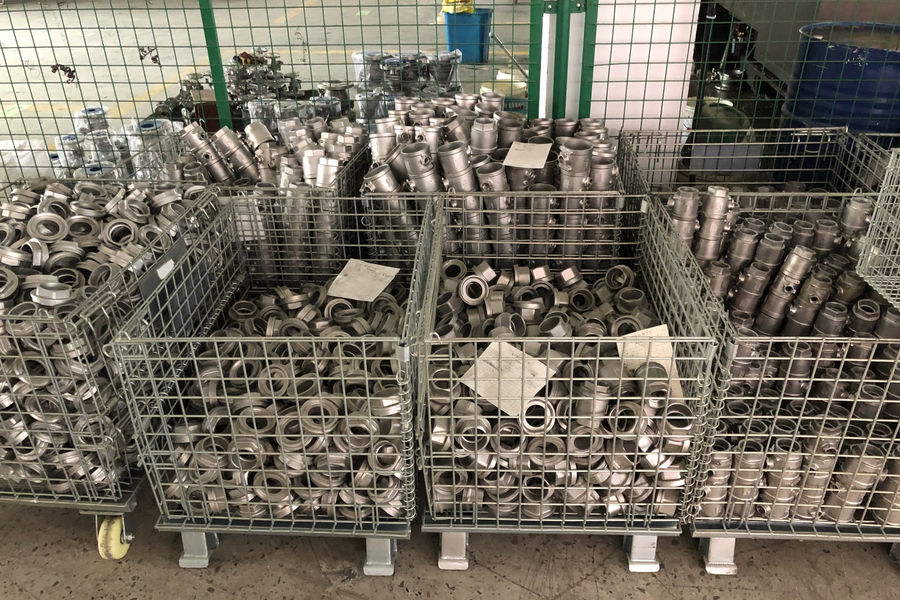
A capable manufacturer should be able to translate an operating envelope into a clear technical offer, identify exclusions, and provide drawings and material details before order confirmation. Review control of incoming castings and forgings, machining capability, component traceability, assembly procedures, torque checks, pressure-test equipment, calibration, nonconformance handling, and final preservation. Factory photos are useful, but process records and sample documents provide stronger evidence of repeatability.
For OEM and distributor orders, evaluate consistency across batches, private labeling, packaging, barcode or part-number control, spare parts, mixed-size consolidation, and change notification. A pre-production sample or first-article inspection can reduce risk when branding, dimensions, or accessories are customized. Compare total delivered cost, including inspection, documentation, rework exposure, freight efficiency, and response time. The cheapest quotation can become the most expensive option when specifications are ambiguous.
Frequently Asked Questions
What is the main difference between SS304 and SS316 ball valves? SS316-type stainless steel generally offers improved resistance in chloride-bearing and some chemical environments, while SS304-type material is often suitable for clean water, air, and general service. Final selection must consider concentration, temperature, deposits, cleaning agents, and project corrosion guidance.
Is a full-port ball valve always better? No. Full port reduces restriction and suits pigging, viscous media, and solids, but it may increase size, weight, and cost. Reduced port can be appropriate when the calculated pressure drop is acceptable. The correct answer comes from process hydraulics and maintenance needs.
Can a standard ball valve be used for throttling? Ball valves are primarily isolation devices. Partial opening can create high velocity, seat wear, cavitation, noise, and unstable control. Purpose-designed control ball valves with characterized trims may throttle effectively, but the manufacturer should size and select them for the application.
What documents should an industrial buyer request? Common requirements include approved drawings, material certificates, pressure-test reports, certificates of conformity, inspection records, and traceable packing documents. Critical projects may add PMI, NDE, fire-test evidence, fugitive-emissions evidence, cleanliness certificates, or third-party inspection.
How should buyers compare quotations? Normalize every offer against one data sheet covering materials, seats, seals, bore, connection standard, pressure-temperature rating, tests, documents, actuator accessories, packing, warranty, and delivery. Any deviation should be stated explicitly. This produces a technically comparable bid rather than a comparison of incomplete unit prices.
Final Selection Checklist
Before releasing a stainless steel ball valve order, confirm the fluid and design conditions; body, ball, stem, seat, and seal materials; construction and bore; end connection and dimensions; pressure-temperature rating; shutoff and test requirements; manual or automated operation; documentation; marking; preservation; packaging; and inspection plan. When these items are aligned, buyers gain a valve that fits the piping, survives the service, and arrives with the records needed for acceptance. Wenzhou Wofer Valve supports global industrial buyers with stainless steel valve selection, OEM coordination, production inspection, and export-ready documentation based on the customer's project specification.


Comments