


Exploring the Essentials of Valves, Flanges, Pipe Fittings, and Pipes in Industrial Applications
- ted wang
- Mar 24
- 3 min read

Industrial systems rely heavily on components that control, direct, and connect the flow of liquids and gases. Among these components, valves, flanges, pipe fittings, and pipes play critical roles. Understanding their functions, types, and applications helps professionals in the valve industry ensure efficient and safe operations. This article breaks down these essentials, offering practical insights for those working with these components daily.
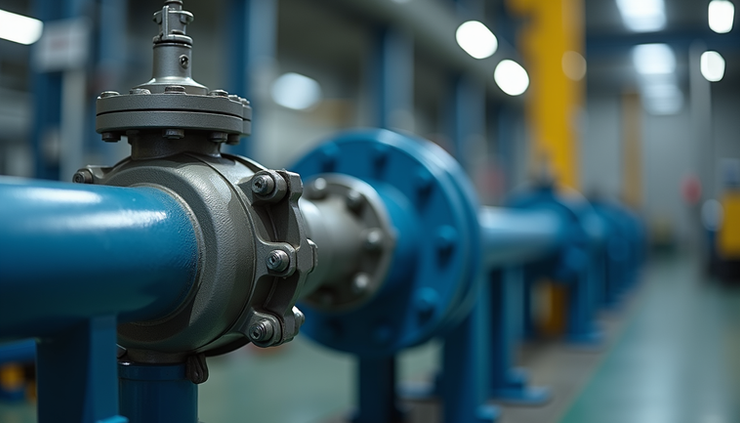
The Role of Valves in Industrial Systems
Valves regulate the flow and pressure of fluids within a system. They can start, stop, or throttle flow, making them indispensable in industries like oil and gas, water treatment, chemical processing, and power generation.
Common Types of Valves
Gate valves: Used for on/off control, they provide minimal pressure drop when fully open.
Globe valves: Designed for throttling flow, offering precise control.
Ball valves: Known for quick shutoff and durability.
Butterfly valves: Lightweight and suitable for large pipe diameters.
Each valve type suits different applications depending on pressure, temperature, and fluid type. For example, ball valves are popular in pipelines requiring fast shutoff, while globe valves excel in systems needing fine flow adjustments.
Materials and Standards
Valves come in various materials such as stainless steel, carbon steel, brass, and plastic. Material choice depends on fluid corrosiveness, temperature, and pressure. Industry standards like API, ANSI, and ISO guide valve design and testing to ensure safety and reliability.
Understanding Flanges and Their Importance
Flanges connect pipes, valves, pumps, and other equipment, creating a sealed joint that can be easily assembled or disassembled. They are essential for maintenance and inspection.
Types of Flanges
Weld neck flange: Provides strong connection, ideal for high-pressure systems.
Slip-on flange: Easier to install but less robust than weld neck.
Blind flange: Used to close pipe ends.
Threaded flange: Suitable for low-pressure applications without welding.
Flanges are typically made from carbon steel, stainless steel, or alloy steel. Proper flange selection ensures leak-free joints and system integrity.
Pipe Fittings and Their Functions
Pipe fittings connect straight pipe or tubing sections, adapt to different sizes or shapes, and regulate fluid flow. They include elbows, tees, reducers, couplings, and unions.
Key Types of Pipe Fittings
Elbows: Change the direction of flow, commonly available in 45° and 90° angles.
Tees: Split or combine flow in three directions.
Reducers: Connect pipes of different diameters.
Couplings and unions: Join two pipes together, with unions allowing easy disconnection.
Pipe fittings must match pipe material and size to maintain system strength and prevent leaks. For example, stainless steel fittings are preferred in corrosive environments.
Pipes: The Backbone of Fluid Transport
Pipes carry fluids from one point to another and come in various materials and sizes depending on the application.
Common Pipe Materials
Carbon steel: Widely used for its strength and affordability.
Stainless steel: Offers corrosion resistance, ideal for chemical and food industries.
PVC and CPVC: Used in low-pressure, non-corrosive applications.
Copper: Common in plumbing and HVAC systems.
Pipe Standards and Sizes
Pipes follow standards such as ASTM and ASME, which define dimensions, pressure ratings, and material properties. Correct pipe selection ensures compatibility with valves, flanges, and fittings, preventing system failures.
Practical Considerations for Industry Professionals
Compatibility: Ensure valves, flanges, pipe fittings, and pipes match in size, pressure rating, and material.
Installation: Proper alignment and torque during flange bolting prevent leaks.
Maintenance: Regular inspection of valves and joints extends system life.
Safety: Use components certified to industry standards to avoid accidents.
For example, in a chemical plant, selecting a valve with the right material and pressure rating prevents corrosion and leakage, protecting both equipment and personnel.
Comments